
This Guide Is 2026-Ready
All recommendations, prices, and coverage checked December 2025.
Valid throughout 2026 — we'll update if anything changes.

Ubigi: The Traveler’s Guide to Global eSIM Connectivity
Traveling in the twenty-first century means expecting a reliable internet connection wherever you go. From booking last-minute trains and checking maps to staying in touch with family or running a business remotely, connectivity is a travel essential. Ubigi is one of the companies that has embraced this reality, offering digital SIM solutions (eSIMs) that let travelers turn on data anywhere without hunting for a local store or dealing with roaming fees. This article explores Ubigi in depth — how its service works, when it makes sense, practical tips, potential drawbacks, and how to get the most value from it.
An overview: What is Ubigi?
Ubigi is a provider of digital mobile data plans using eSIM technology. Rather than inserting a physical SIM card into your phone, you install a small digital profile (an eSIM) on compatible devices. That profile connects your device to local mobile networks in the country or countries included in your plan. This means instant internet access without the need to queue at a shop or wrestle with local carrier menus — everything is handled digitally.
Why digital SIMs matter
The idea behind eSIMs is simple: convenience and flexibility. When traveling, people value time and predictability. A digital solution replaces the old hassles — lost SIM trays, registration forms in languages you don’t speak, messy top-up procedures, and worrying about roaming bills. Ubigi’s goal is to fold that convenience into an easy package for casual tourists, business travelers, and digital nomads alike.
How Ubigi works — step-by-step
- Choose destination and plan: Ubigi offers country-specific, regional, and sometimes global plans. Pick the plan that matches your itinerary and data needs.
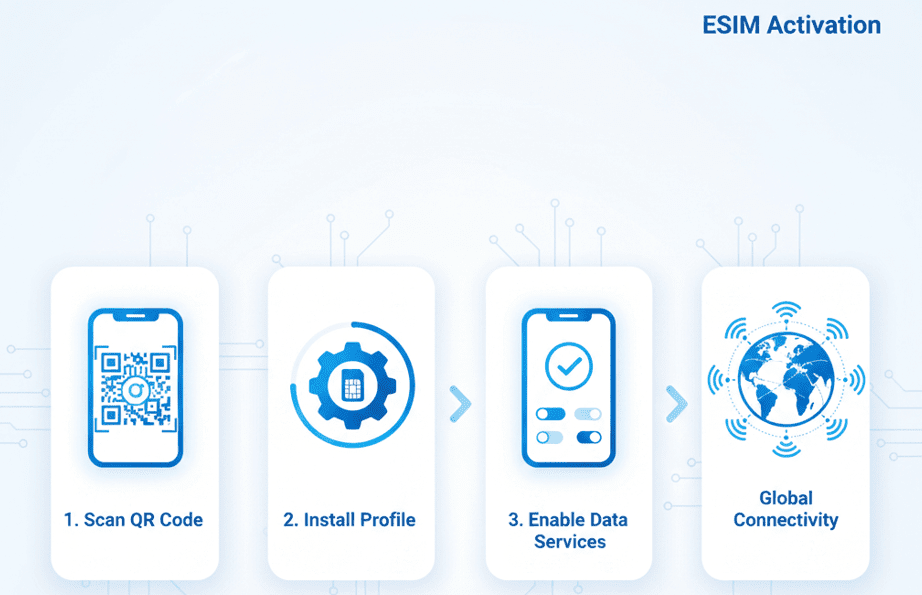
- Purchase online: Checkout digitally and receive an activation method — usually a QR code or a direct install button inside an app.
- Install the eSIM: Add the Ubigi profile to your eSIM-capable device following clear instructions.
- Activate on arrival: Some plans activate on first connection in the destination; others start immediately when you enable data.
- Manage and top up: Many platforms let you monitor usage, buy additional data, or renew plans through an app or web dashboard.
Key features you’ll encounter
Ubigi and similar eSIM providers design their plans with traveler needs in mind. Expect these recurring features:
- Prepaid digital delivery: No physical SIM shipping; instant setup.
- Country or regional plans: Options to cover a single country or a set of nearby countries under the same plan.
- Flexible durations: Short-term for vacations or longer for extended stays.
- App-based management: Many users prefer an app to view remaining data, buy more, and manage eSIM profiles.
- Compatibility with multiple devices: Most modern phones, tablets, and some laptops support eSIMs — but always check your device first.
Who should consider Ubigi?
Ubigi appeals most strongly to people who value convenience and flexibility. Here are typical users who gain the most:
- Business travelers who need reliable data for meetings, email, and cloud access without roaming surprises.
- Frequent flyers who move between multiple countries and don’t want to buy or store multiple local SIMs.
- Vacationers who prefer instant connectivity the moment they arrive at their destination.
- Digital nomads who work remotely and need predictable, prepaid data options across regions.

Advantages of using Ubigi
The principal strengths of Ubigi boil down to convenience, predictability, and time savings:
- Instant activation: No need to visit a store or wait for SIM delivery.
- Plan transparency: Prepaid plans make costs predictable and avoid surprise roaming charges.
- Minimal physical clutter: No SIM cards to lose or swap.
- Digital control: Manage plans through an app or web interface and top up in minutes.
- Useful for multiple brief trips: If you’re hopping between cities or countries for short periods, an eSIM can be the simplest option.
Common limitations and where to be cautious
While eSIMs offer many advantages, they are not a universal replacement in every situation. Some limitations to consider include:
- Device and carrier compatibility: Not every phone supports eSIM or dual-SIM eSIM configurations. Also, some carrier-locked phones may block eSIM use.
- Voice and SMS: Many eSIM plans are data-only. If you need a local phone number for voice or SMS, you may need a physical SIM or a separate service.
- Hotspot limitations: Tethering may be restricted on some plans, so sharing the connection with a laptop or multiple devices might be limited.
- Coverage depends on local operators: Ultimately, the speed and reach of Ubigi’s service rely on the local networks they partner with. In rural or poorly served areas, connectivity may be weak regardless of provider.
Plan types: picking the right one
Ubigi commonly offers several plan categories to match different travel styles:
- Single-country plans: Ideal for travelers staying in one place for a short period.
- Regional plans: Useful for multi-country road trips or neighboring-country tours.
- Global plans: Best for long-term nomads or world travelers who want to avoid buying individual plans.
- Pay-as-you-go / top-up options: Handy when you need just a small extra bundle during the trip.
Installation and activation: practical walkthrough
Installing an Ubigi eSIM is straightforward on most modern devices. Here’s a practical step-by-step you can follow:
- Check compatibility: Confirm your device supports eSIM and that it is unlocked.
- Buy the plan: Purchase the desired plan through Ubigi’s website or app and access the activation instructions.
- Install the profile: Use the QR code provided or direct app install to add the eSIM to your phone’s cellular profiles.
- Set your preferences: Name the profile for clarity, and set which SIM is default for data and which for voice/SMS if you are keeping a physical SIM in the device.
- Activate on arrival: Some plans only count days once they detect the device in the destination country. Others start when you enable the plan — check the details carefully.
Performance realities: speeds, throttling, and "unlimited"
The label “unlimited” or “high allowance” in marketing can be confusing. For many digital SIMs, including offerings you’ll see in the market, “unlimited” usually means no strict data cap but could be subject to network management policies. This means speeds might be deprioritized during heavy use or in congested areas. When choosing a plan, read the fine print about fair-use, peak-time management, and hotspot rules so you know what performance to expect when you need it most.
Real-world uses and example scenarios
To understand how Ubigi can fit into travel life, consider a few common scenarios:
- Business trip to a single city: A short single-country plan provides predictable bandwidth for video calls and email without roaming bills.
- Multi-city European vacation: A regional plan eliminates the hassle of swapping SIMs at borders and simplifies connectivity across countries.
- Digital nomad on the road: A global or multi-month plan reduces overhead for frequent moves and allows flexible top-ups from anywhere.
- Family on holiday: Each family member can have an eSIM, or one traveler can tether (if allowed) to share connection — simplifying coordination and navigation.
Troubleshooting tips: solving common problems
Even with the best technology, things can go wrong. Here are practical troubleshooting steps:
- No install option: Confirm the device is on a supported OS version and that eSIM profiles are permitted by the phone’s carrier lock status.
- Data not working after install: Restart the phone, confirm the eSIM is selected for data, and verify APN settings if provided by the operator.
- Activation won't trigger: Some plans require you to be physically present in the destination; relocation or airport Wi-Fi can mistakenly trigger or delay activation.
- Speed issues: Test at different locations in the city and check whether the plan caps or throttles hotspot traffic.
- Refunds or support: Keep order IDs and screenshots to speed up discussions with support teams when a plan fails to work as expected.
Cost and value: how to think about pricing
Pricing structures vary: single-country plans are usually priced to reflect local mobile operator costs; regional and global plans aggregate those costs into a single product. The real question is value: do you prioritize the cheapest possible data, or do you value simplicity and predictability? For travelers who hate surprises or need dependable internet for remote work, a modest premium for convenience often pays for itself by saving time and reducing stress.
Security and privacy considerations
Connecting to local networks via an eSIM is not inherently less secure than using a physical SIM, but certain practices help protect data:
- Use a reputable VPN when accessing sensitive accounts on unfamiliar networks.
- Keep your phone’s OS and apps updated for the latest security patches.
- Avoid entering banking credentials over open public Wi-Fi without a VPN or secure connection.
Environmental angle: less plastic, less waste
One small yet meaningful benefit of eSIMs is the reduction of physical waste. Plastic SIM cards and their packaging add up globally. By moving provisioning to software, providers like Ubigi reduce manufacturing and shipping footprints — a minor but positive environmental impact.
How Ubigi compares to alternatives
When comparing Ubigi to other options, consider three axes: price, convenience, and features. Physical local SIMs often win on price for long stays in a single country. Roaming convenience may be best with your home carrier if you have a suitable roaming bundle. eSIMs, including Ubigi, typically balance moderate to strong convenience with competitive pricing for short stays or multi-country itineraries.
Tips to minimize data usage and avoid surprises
- Download maps and media for offline use before travel.
- Turn off background refresh for non-essential apps.
- Prefer Wi-Fi for large uploads or downloads where available.
- Use lower-resolution streaming when high resolution isn’t necessary.
- Monitor data usage daily when you’re on a limited plan.
Customer experience: what to expect
Customer experiences with eSIM providers vary widely. Many users enjoy the instant access and straightforward top-ups. A small portion encounter support delays or activation mishaps. The single best practice that reduces friction: install and test the eSIM while you still have a stable Wi-Fi connection — ideally at home or before you depart.
Legal and regulatory considerations
Mobile services are subject to local laws. In some countries, registering a SIM may require an ID. eSIM providers generally partner with local operators who meet those regulatory requirements, but you should always read the provider’s terms to ensure compliance with local rules in the countries you’ll visit.
Case study examples
Consider two short case studies that illustrate different traveler needs:
- Jane — a conference attendee: Jane flies to a city for a four-day conference. She needs reliable data for video calls and cloud access. A single-country Ubigi plan bought and installed before the trip provides cost-predictable, immediate access.
- Marco — a backpacker through several countries: Marco plans a three-week trip across neighboring countries. A regional eSIM avoids repeated SIM purchases at borders and keeps his itinerary simple.

Advanced tips for power users
If you rely heavily on connectivity or manage a team remotely while traveling, consider:
- Multiple profiles: Some devices support multiple eSIM profiles. Keep a backup eSIM in reserve for redundancy.
- Automated top-ups: Link a payment method for quick top-ups and avoid downtime during critical work periods.
- Data splitting: Use a low-cost local SIM for voice/SMS and an eSIM for data-heavy tasks if available in your destination.
How to combine Ubigi with local services
Using Ubigi alongside local mobile services can be pragmatic: keep a local number active for two-factor authentication or local calls while relying on Ubigi for large data needs. This hybrid approach offers the best of both worlds — local telephony and global convenience.
What to check in terms and conditions
Before purchasing, review:
- Start/activation time rules
- Fair-use and throttling policies
- Hotspot/tethering allowances
- Refund and support terms
- Coverage maps and local operator partners
Future of travel connectivity and Ubigi’s place in it
The migration toward digital provisioning is likely to gather pace. As more devices support eSIM and more operators open their networks, travelers will find even greater choice and competition. Ubigi is part of this shift — offering a pragmatic bridge between legacy mobile practices and a future where connectivity is delivered by software and subscription rather than plastic cards.
Conclusion
Ubigi makes connectivity simple: purchase, install, and go. For travelers who value time, predictability, and a frictionless experience across borders, an eSIM provider like Ubigi is an excellent choice. If your priority is raw cost for a long in-country stay, local SIMs may still win on price, but the time and hassle saved by eSIMs are often worth the differential.
Appendix — quick checklist before you travel
- Confirm your phone supports eSIM and is unlocked.
- Buy and install your Ubigi eSIM on stable Wi-Fi before departure.
- Save QR codes and order confirmations as screenshots.
- Keep your home SIM if you require SMS for authentication.
- Check tethering rules if you plan to share your connection.